Role of Big Data in Business Decision Making
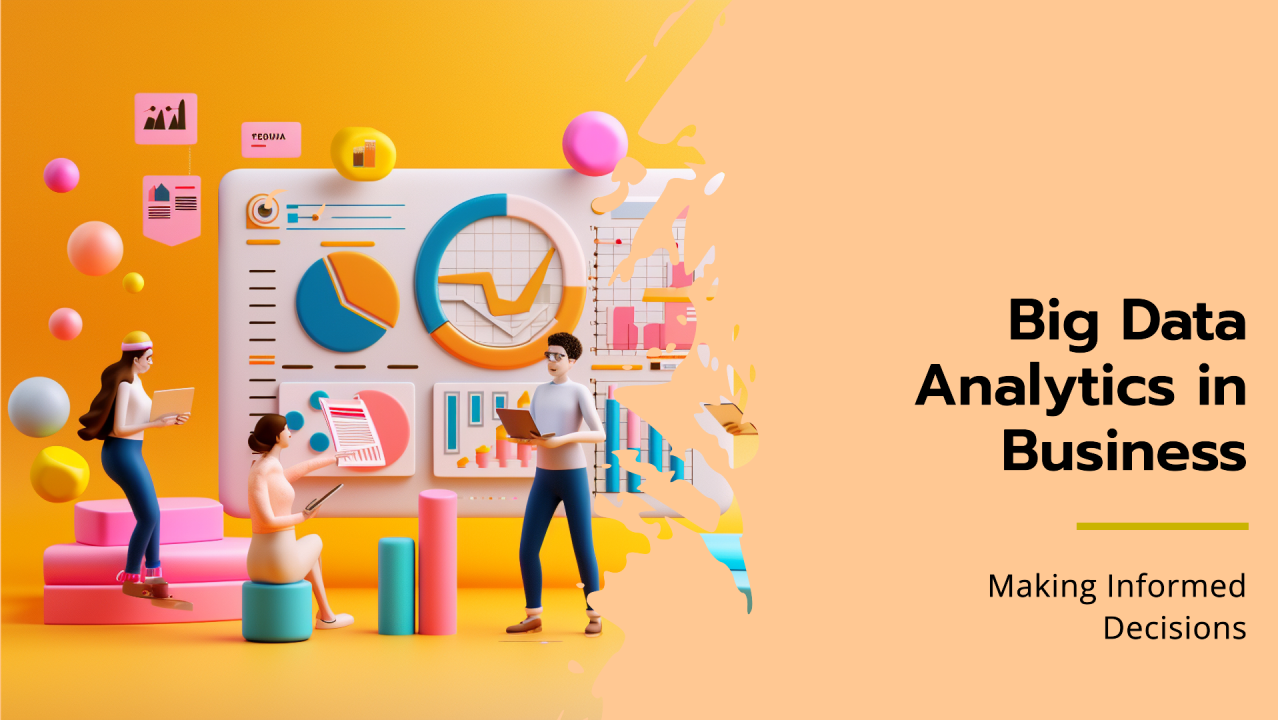
In today's rapidly evolving business landscape, the role of big data
analytics in shaping strategic decisions cannot be overstated. This post
explores how organizations are using big data to drive growth, improve
efficiency, and gain a competitive edge.
Understanding Data Analytics vs. Big Data
Analytics
While data analytics is the general practice of analyzing any data, big
data analytics focuses on massive, complex datasets that traditional
tools cannot handle. These larger datasets reveal deeper insights and allow
companies to see opportunities they might otherwise miss.
Benefits of Data Analytics for Business
- Informed Decision-Making: Using historical data and predictive
models, businesses can make
evidence-based decisions to stay ahead.
- Real-time Support: Live data helps businesses quickly react to
market changes and customer needs.
- Improved Customer Understanding: Analytics builds customer
profiles, helping businesses create
personalized marketing strategies.
- Cost Optimization: By finding inefficiencies, analytics helps cut
costs and improve resource
allocation.
- Risk Management: Analyzing past data uncovers threats and
prevents costly disruptions.
- Competitive Advantage: Businesses using analytics can spot trends
earlier and act faster than
competitors.
Challenges and Solutions
Despite the benefits, businesses often face challenges such as data privacy,
poor data quality, and lack of
skilled staff. By investing in secure systems, training employees, and
maintaining high-quality datasets,
companies can overcome these hurdles.
Why Choose Revotic AI?
We don’t just create technology we create opportunities. Our goal is to give
businesses the power to stay ahead, be more innovative, and grow without
limits.
Challenges and Solutions
Despite the benefits, businesses often face challenges such as data privacy,
poor data quality, and lack of
skilled staff. By investing in secure systems, training employees, and
maintaining high-quality datasets,
companies can overcome these hurdles.
Leveraging Big Data Analytics for Growth
Big data is a growth engine. By analyzing massive datasets, companies can
predict customer behavior, improve
marketing, and optimize operations. This allows organizations to discover
new opportunities and build
sustainable growth strategies.
Navigating the Complexities of Implementation
Setting up analytics systems is not easy. From storage and tools to data
privacy, challenges exist at every step.
However, with the right planning, technology, and trained talent,
organizations can unlock the true power of
their data assets.
Embracing a Data-Driven Culture
For analytics to succeed, businesses must promote a culture where decisions
are guided by data instead of
guesswork. This requires strong leadership, employee training, and making
data accessible across teams. A
data-driven culture encourages innovation and efficiency.
Future Trends in Data Analytics
From AI and machine learning to predictive and augmented analytics, the field
is evolving rapidly. Businesses
adopting these advanced methods will gain deeper insights, automate tasks,
and stay competitive in a data-driven
world.
"Big data is not about having more information. It's about asking better
questions and finding better
answers."
Revotic AI
Conclusion
Big data analytics is more than a trend — it’s a necessity. By embracing
data-driven strategies, organizations
can make smarter decisions, improve operations, reduce risks, and gain a
competitive edge in today’s digital
economy. As the volume of data continues to grow, businesses that harness
big data effectively will be the ones
that thrive and lead in their industries.